Showing posts with label books. Show all posts

Saturday, January 10, 2015

Book, Movie, & TV show Discoveries of 2014

Last year, just for the heck of it, I decided to start keeping a list of all the books I read, and movies & shows that I watched.  I included things that came out in 2014 and things that have many years behind them, and even ones that I was reading/watching for the 2nd, 3rd, 4th time....  Now that the new year has arrived, I thought it would be fun to look back and consider what were my favorite discoveries (and re-discoveries) of 2014. 

BOOKS

My favorite comic book/graphic novel of the year was definitely Joe Sacco's Safe Area Goražde--a powerful depiction of the war and genocide in Bosnia & Herzegovina from 1992-95.  It tells the stories of the Muslim residents in the small town of Goražde: a UN designated "safe area" which was anything but safe.  Just like Sacco's earlier graphic novel Palestine (which is what inspired me to volunteer in the West Bank a few years ago), Safe Area Goražde is beautifully drawn and tells a riveting and devastating account of the war through a deft combination of intimate, personal stories and cold, hard facts. 


My favorite short story/novella was The Cat Who Went to Heaven by Elizabeth Coatsworth.  It's a gorgeous retelling of a Buddhist folktale.  Simple and deeply touching--if you love cats, painting, or Japan, you should definitely give it a read. 
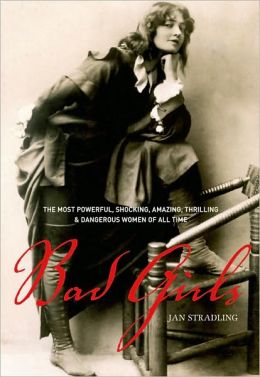

My top non-fiction discovery of the year was Bad Girls by Jan Stradling.  Telling the amazing stories of 22 kick-ass women from throughout history--queens, pirates, warriors, serial killers, and con artists--it's a really fun, interesting read.  Some of these women are already household names--like Cleopatra and Mata Hari--but there are plenty of others whose names you've never heard, and after reading their stories, you'll wonder why!
My favorite classic re-read of the year has to be a tie between The Great Gatsby by F. Scott Fitzgerald and Pride & Prejudice by Jane Austen.  I enjoyed Great Gatsby a whole lot more than I did when I had to read it in high school.  I think being an adult and having a deeper understanding of and appreciation for human behavior made a big difference--and also just being allowed to focus on the book as a story about people instead of having to talk on and on about symbolism probably helped.  -_-  Pride and Prejudice gets a mention just cause it's one of my all-time favorite books and becomes more and more so each time I read or watch it.  :-)


But my number one favorite book of the year was definitely The Hours by Michael Cunningham.

This is a really personal choice obviously.  I already love Mrs. Dalloway and this book is a take-off/homage to that novel.  But even though Cunningham is basically doing a modern retelling and exploration of this great literary landmark (he even mimics Woolf's style of writing), the resulting story is still very much his own, and it's powerful both as a stand-alone novel and as a companion to Mrs. Dalloway.  They're almost more real than real life, and they allow you to experience the world in another person's skin at a level few authors are able to achieve.


MOVIES

This was Wes Anderson and Quentin Tarantino year for me.  I always liked Tarantino movies, but the more I watch the more my admiration grows--though I think Pulp Fiction is still my favorite. 

As for Wes Anderson--how did I not know about this guy before?!  I saw The Grand Budapest Hotel in theaters early in the year, and I've been on an Anderson kick every since.   Moonrise Kingdom is a marvel, and one of my all-time favorites: simple--perfect--genius. 
http://ia.media-imdb.com/images/M/MV5BMTEwMTc3NDkzOTJeQTJeQWpwZ15BbWU3MDI4NTAwNzc@._V1_SX214_AL_.jpg

My top cinematic experience of the year is a tie between a very new movie and a rather old one: Interstellar and The Princess Bride.   Interstellar--for all of it's little logical faults and typically Nolan-esque convoluted plot--was powerful in a surprisingly elemental and primaeval way for me.  That's the first time I've cried in a theater since Toy Story 3.  (Yes, I'm a bit of a sap--shut up).  :-P

The Princess Bride, I had the privilege of seeing at a special late-night showing at Riverview Theater in Minneapolis.  I was rather afraid that the audience would be full of people quoting along with the entire movie, but actually the only time that happened was when everyone spontaneously joined in with the Impressive Clergyman: "And wuv...twue wuv..."  :-D  Watching a movie with fans is so much fun. 

And...I finally saw Frozen.  I didn't mean to, but my friends were all going to watch it, and I was like, "Well, why not?"  I was pleasantly surprised.  I'd been very disinclined to see it since the music and what I'd heard about the plot didn't sound all that interesting--and maybe I was also turned off by all the hype--but it was pretty good.  Even the music was better in context.  As for all the hype, I think this video does a really good job of explaining it--and they point out a lot of things that I found interesting about the movie too: Why Were People & Critics So Infatuated With Frozen? | Idea Channel | PBS Digital Studios


TV SHOWS

Of course everyone was off their rockers this year about the new seasons of Sherlock, Downton Abbey, and Game of Thrones.  It was the first time that I've watched...practically anything...actually on TV in a long, long time.  I wasn't as crazy about this season of Sherlock as everyone else was though--in fact I had a lot of problems with it, not least of all the excessive mushiness into the which the plot sank like quicksand.  But I won't get into that.  Weis and Benioff almost spoiled an otherwise fantastic season of Game of Thrones with their disturbingly gratuitous rape scenes.  (Seriously, guys?  You don't think there's already enough misogynistic violence in the books?)  I could go into a long rant about why I think the changes they made are particularly creepy and damaging to the story, but I won't. 

My favorite new discoveries of the year though, were two (I think) relatively unknown shows called The United States of Tara and Moone Boy.  US of T is an American show that ran from 2009-2011 about a woman with multiple personality disorder and how she and her family try to cope with it.  To be honest, it's the sort of premise that I would normally roll my eyes at since TV has a tendency to make these things stupidly over-the-top--but the magic is in the details.  It's got wonderful, snappy dialog and winning characters (along with an award-winning performance by Toni Collette), and a lot of genuinely heart-felt moments.  Even if the portrayal of the mental disorder isn't accurate, I think the way they cope with it is. 


Moone Boy is a little comedic marvel.  It's mini-series about a little boy growing up in the west of Ireland in the late 80's, accompanied by a snarky, imaginary friend who gives him terrible advice.  The show is quirky and charming in all the best ways.  I'm looking forward to season three!

And okay, this is cheating cause I didn't see this until a couple days ago, but...whatever.  I am absolutely in love the mini-series Over the Garden Wall.  Broadcast on Cartoon Network in November of 2014, this children's/not-for-children cartoon miniseries is brilliant.  In every possible way.  With unforgettable characters, gorgeous animation, and a brilliant series of plots that mess with all your expectations, it's a tripped-out mash-up of Alice in Wonderland, Miyazaki, Huckleberry Finn, and good old-fashioned, scare-your-pants-off German style fairy tales.  It's absurd, profound, beautiful, creepy, joyous, and utterly mind-bending.  I've watched it twice in the last two days and I suspect I'll watch it again soon. 


Sunday, May 25, 2014

"It is better to dream your life than to live it" - Thoughts on Art, Dreams, and Creation

"Ambition intoxicates more than fame; desire makes all things blossom, and possession makes them whither away; it is better to dream your life than to live it, even though living it is still dreaming it, albeit less mysteriously and less clearly, in a dark, heavy dream, like the dream diffused though the dim awareness of ruminating beasts.  Shakespeare's plays are more beautiful when viewed in a study than when put on in the theater.  The poets who have created imperishable women in love have often only ever known humdrum servant girls from taverns, while the most envied voluptuaries are unable to grasp fully the life they lead, or rather the life that leads them.   
I knew a young boy of ten, of sickly disposition and precocious imagination, who had developed a purely cerebral love for an older girl. He would stay at his window for hours on end to see her walk by, wept if he didn't see her, wept even more if he did.  He spent moments with her that were very few and far between.  He stopped sleeping and eating.  One day, he threw himself out of his window.  People thought at first that despair at never getting close to his lady friend had filled him with the resolve to die.  They learnt that, on the contrary, he had just had a long conversation with her: she had been extremely nice to him.  Then people supposed that he had renounced the insipid days he still had to live, after this intoxication that he might never be able to experience again.  Frequent remarks he had previously made to one of his friends finally led people to deduce that he was filled with disappointment every time he saw the sovereign lady of his dreams; but as soon as she had left, his fertile imagination restored all her power to the absent girl, and he would start to long her her again.  After that final interview in which he had, in his already active and inventive fantasy, raised his lady friend to the high perfection of which her own nature was capable, and been filled with despair when he compared that imperfect perfection to the absolute perfection on which he lived and from which he was dying, he threw himself out of the window.  Subsequently, having been reduced to idiocy, he lived for a long time, since his fall had left him with no memory of his soul, his mind, or of the words of his lady friend, whom he now met without seeing her.  In spite of supplications and threats, she married him, and died several years later, without having managed to make him recognize her.  
Life is like this girl.  We dream of it, and we love what we have dreamt up.  We must not try to live it: we throw ourselves, like that boy, into a state of stupidity--but not all at once: everything in life deteriorates by imperceptible degrees.  Within ten years, we do not recognise our dreams, we deny them, we live, like an ox, for the grass we graze on moment by moment.  And from our marriage with death, who knows if we will arise as conscious, immortal beings?"
~Marcel Proust
(from Pleasures and Days: Nostalgia - Daydreams Under Changing Skies, part 6)

I see so much of myself in Proust.  Not always the best parts of me, but real parts of me none-the-less.  Like Proust, I'm a perpetual dreamer, highly introspective, and I often prefer the company of the characters in my head to that of real people.  What I find interesting, is that in spite of this common tendency, Proust and I seem to have very different opinions about how it affects our lives.  While I am constantly pushing myself to spend less time alone, to go out among real people and have real life experiences, Proust extols the world of dreams.  Numerous times throughout Pleasures and Days, he claims the imagination's superiority over travel, over conversation, over performances and concerts, over all of life's experiences--just as here, he claims the superiority of imagined love over real love.  Or perhaps he thinks that there is no real love: at least, not the kind that fills your heart and soul and transforms your entire world for as long as it lasts.  On the other hand, I know from experience that, although imagination is a wonderful thing, you can easily waste away inside of it; and although great adventures and romances, and moments deliciously charged with significance, are possible at any given moment in your mind, living off of them is like eating shadows.  It can never compare with the taste of meaningful connections with real people, and the challenging and heart-filling experiences of real life.  The problem is that the latter are exponentially harder to come by.  But trying to live off dreams alone is a one-way ticket to depression.  Your mind will wither away and became stagnant--stupid--one that no longer grows, or changes, or learns, one that ceases to observe the infinite glories and banalities of life.   Daydreams, when exploited in excess, are like drugs; it's easy to take a shot of them for a quick-fix, but it's no substitute for real-life joys.  


But I'm sure, though Proust claims the imagination's superiority over all and advocates total seclusion as a means of letting your mind flourish, he clearly spent his fair share of time in the real world.  How else could he have written all these poignant vignettes at the age of 25, creating human portraits that can pack the significance and subtlety of an entire life into 10 pages?  He knew real life, and he understood it better than most.  What's so hard for someone like Proust, though, is that having an imagination is so vivid and so wonderful makes it impossible for life to compare with the extraordinary things you create in your head.  As Scott Adams once pointed out: "Imagination has a way of breeding disappointment."  

Friday, November 8, 2013

Women in Game of Thrones

It always kind of disturbed me how the women are treated in Game of Thrones.  As objects really.  As sex toys.  In the show there are countless gratuitous scenes with prostitutes, naked women, and degrading remarks about women.  On the surface, it seems like Game of Thrones is pretty grossly sexist. 

But let's take a step back.  Game of Thrones takes place in a setting that very closely resembles Medieval Europe.  The way women are treated in the show is probably a pretty accurate portrayal of the lives of Medieval women in general.  After all, in those times, women were essentially property, just as they are in Game of Thrones.   Saying that Game of Thrones is sexist is kind of like saying that 12 Years a Slave is racist.  It completely misses the point.

Not that Game of Thrones is expressly trying to spread awareness of the abuse of women or anything like that.  It is still, primarily, just a great fantasy adventure story.  But when it really comes down to it, what saves Game of Thrones from being sexist is that fact that every prominent female character in the story is strong, intelligent, and has such a depth of character that you can't help but empathize with her.

Even a character like Cersei, who I think we all can agree, is a Grade A Bitch, has moments where you really feel sorry for her, and she definitely has reasons for being the way she is.  The scene where the women are hiding in the Red Keep during the Battle of Blackwater and her conversation with Tyrion in the final episode of season three do a great deal to humanize her.  You'd have to be cold as stone not to pity her when she talks about her son Joffrey.  So sad. 

What I really love about the women in Game of Thrones, however, is the fact that they are all strong, and yet all so different.   When I was an adolescent, I read a great deal of fantasy novels, and after a while, it really annoyed me that the only women who were portrayed as "strong" were the ones who completely rejected their traditional feminine roles.  They were the tomboys, the sword-wielding women who dressed in men's clothes and took on a man's role.  When I read Game of Thrones in high school, I was overjoyed to discover Catelyn Stark--a noblewoman who remained completely within the bounds of her traditional gender role, and yet whom no one could deny had nerves of steel, was smart, brave, and fiercely loyal.  How could anyone not respect Lady Stark?  She was the ultimate strong, feminine, dutiful woman.  A true noblelady. 

Catelyn Stark was the one who struck me the most in high school, but after watching the show, I am reminded of how the strong female characters in Game of Thrones really fill the spectrum of possibilities.

Sunday, December 9, 2012

The Fundamental Flaw in Ayn Rand’s Philosophy


The Philosophy

Atlas Shrugged is perhaps one of the most compelling books I have ever read.  I read it, just on a whim, when I was in high school, and since then it has stuck with me almost more than any other book.  The power of it lies in the characters, the world, the writing itself, and above all in Rand’s radical theory that being selfish is the only way to be moral.  She believed that, ultimately, doing what’s best for yourself is the best thing you can do, both for yourself and everyone around you.  She was the ultimate rationalist and the ultimate  meritocrat.  She envisioned a society in which the most productive and the most talented always end up on top, simply because they produce what is most useful to society.  Altruism is unnecessary because if people know that they will only receive good things by being a good, productive member of society, then they will shape up and begin making themselves useful to other people—because it is in their own self-interest.  If, on the other hand, they can expect welfare, charity, or any other hand-outs that they did not earn, she believed that society would disintegrate into one where the many take advantage of these hand-outs, while the few noble people continue to work hard because their inner moral strength allows them no other option.  This is the dystopic world that she presents in Atlas Shrugged.   

The Novel

Atlas Shrugged is a beast of a novel—over 1,000 pages long—and it is relentless in its lionizing of the enterprising individual, its paeans to rationalism, and its message that money is the only fair arbiter of the world, and that any government attempt to redistribute money in the name of making things more “fair” is doomed to failure.  As insane as it sounds when I describe it like that, this book completely captivated me from beginning to end.  For well over the first half I was truly fascinated by her ideas, her story, her dystopic world.  It was only as I got towards the end, that a creeping discomfort with her philosophy grew larger and larger in my mind.  By the time I turned the last page, I had figured out why.